Key Takeaway (TL;DR)
Solar rooftop maintenance is not merely about splashing water on photovoltaic glass. A single building rooftop often houses two completely distinct solar technologies: a grid-tied Solar Photovoltaic (PV) system producing electricity and a centralized Solar Water Heating (SWH) collector bank providing hot water. During a recent Annual Maintenance Contract (AMC) visit to a residential housing society in Pune with a 20 kW PV plant and a centralized SWH system, Solabrix technicians demonstrated why both systems demand rigorous, tailored care. Neglecting PV panels leads to string mismatch and lost grid savings; neglecting solar water heaters triggers internal 2 kW–3 kW backup electric coils that quietly consume the very electricity the PV system generates. Furthermore, true maintenance includes calibrated electrical diagnostics—our before-and-after string measurements showed immediate performance recovery in both operating voltage and current.
⚡ Quick Field Summary: The Dual-System Rooftop Visit
- Asset 1 (Electricity): 20 kW Grid-Tied Solar PV System (String Inverter, high-rise elevated structure).
- Asset 2 (Thermal): Centralized Flat Plate Collector (FPC) Solar Water Heating System (~1,000–1,500 LPD).
- The Core Finding: The before and after electrical measurements confirmed substantial performance recovery in the form of increased string voltage and operating current under matched solar irradiance.
- Safety & Equipment: Full-body harness tie-offs on elevated walkways, low-pressure de-ionized water, and telescopic scratch-free microfiber poles.
A recent Annual Maintenance Contract (AMC) service visit by Solabrix to a multi-story cooperative housing society in Pune offered a practical reminder of an operating reality that is frequently overlooked: a single building rooftop can host more than one solar energy system—and each requires a fundamentally different kind of engineering care.
When our operations crew arrived on site, they found a 20 kW grid-tied solar photovoltaic (PV) array installed on an elevated structural canopy high above the terrace. Just a few meters away sat an expansive array of glazed flat-plate solar water heating (SWH) collectors supplying hot water to residents.
Both systems rely on capturing the sun's irradiance. Both operate in the same outdoor environment. Yet their working principles, failure modes, and maintenance protocols could not be more distinct.
Here is an unvarnished engineering look at what took place during this visit, why ordinary panel washing falls short, and why comprehensive rooftop asset care requires both electrical diagnostics and thermal maintenance.
1. Solar Panels Live Outdoors: The Reality of Pune's Urban Dust
Solar panels spend their entire 25-year design life exposed to the elements. They endure extreme ambient heat cycles, monsoon rain, airborne soot, construction dust, and biological deposits such as bird droppings.
In a rapidly developing city like Pune, airborne dust is an aggressive and persistent challenge. Between ongoing infrastructure construction, vehicular particulate matter (PM2.5 and PM10), and dry seasonal winds, a fine matte film settles across glass surfaces within days of dry weather.
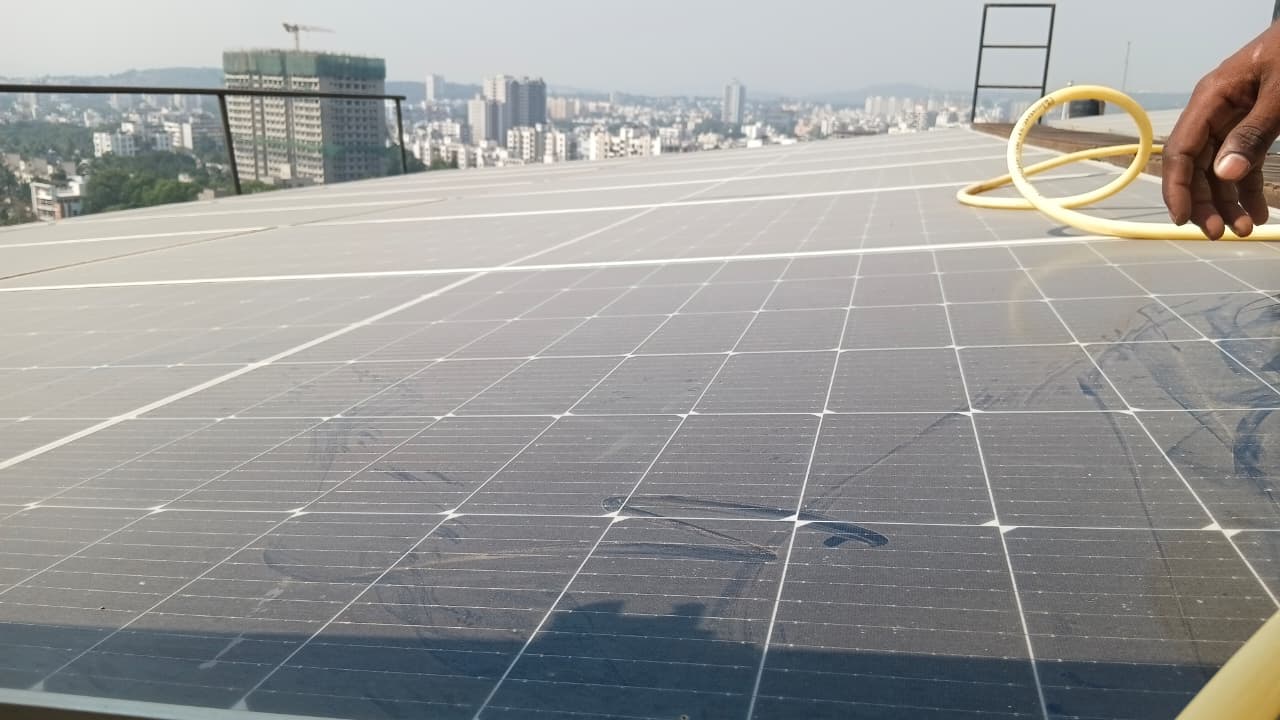
When morning dew condenses on dirty panels, it combines with fine cement dust and atmospheric particulates to create an adhesive crust known in solar engineering as cementitious soiling. Rain showers often make this crust worse rather than better—light drizzles fail to rinse the modules clean, instead clumping the dust into muddy rivulets that dry into hard, uneven blotches.
The consequences for a 20 kW system are immediate and severe:
- Optical Attenuation: Dust reflects and absorbs incoming photons before they can reach the silicon wafer, directly reducing electricity generation by 15% to 25%.
- Current Bottlenecks: In a series-connected DC string, the entire string's output is governed by the lowest-performing module. If a single panel is heavily soiled by bird droppings or corner mud deposits, the entire string suffers disproportionate derating.
- Thermal Hotspots: Uneven dirt deposits cause shaded cells to act as electrical resistors rather than power generators, dissipating energy as localized heat that can permanently degrade EVA encapsulants and cause backsheet blistering.
2. Washing Done Right: Safety Rigging, Water Quality, and Thermal Shock Rules
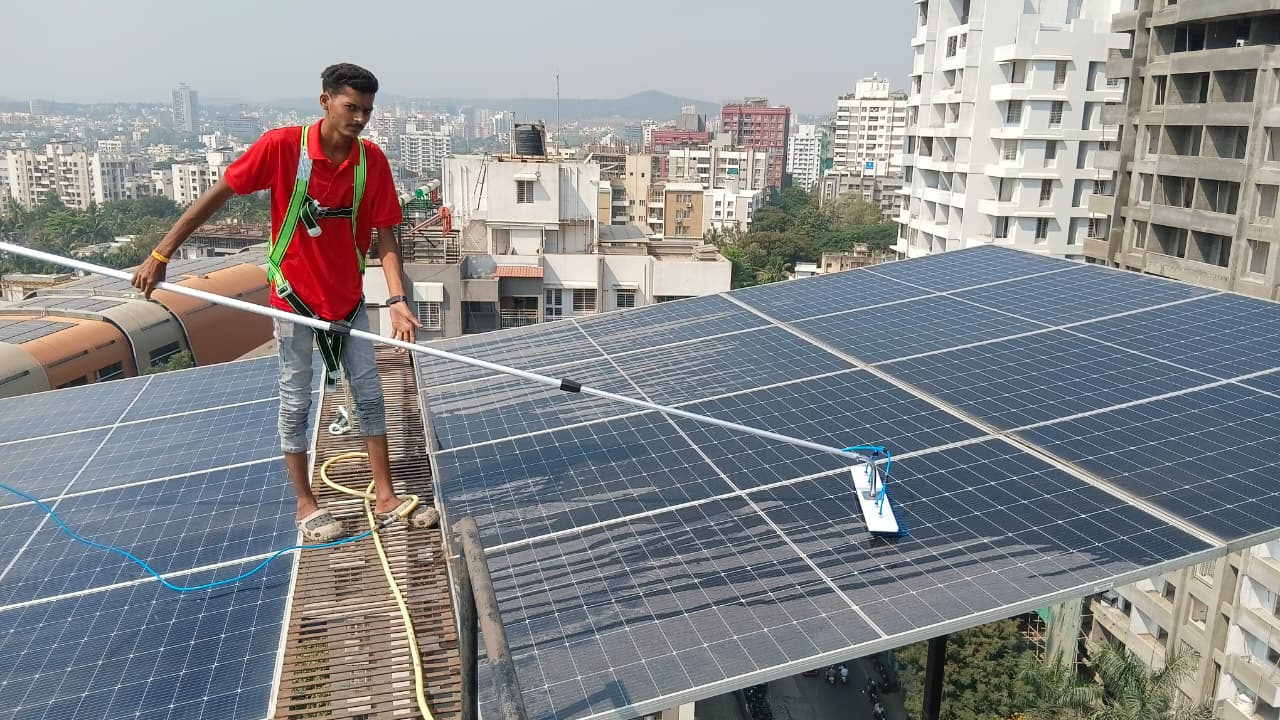
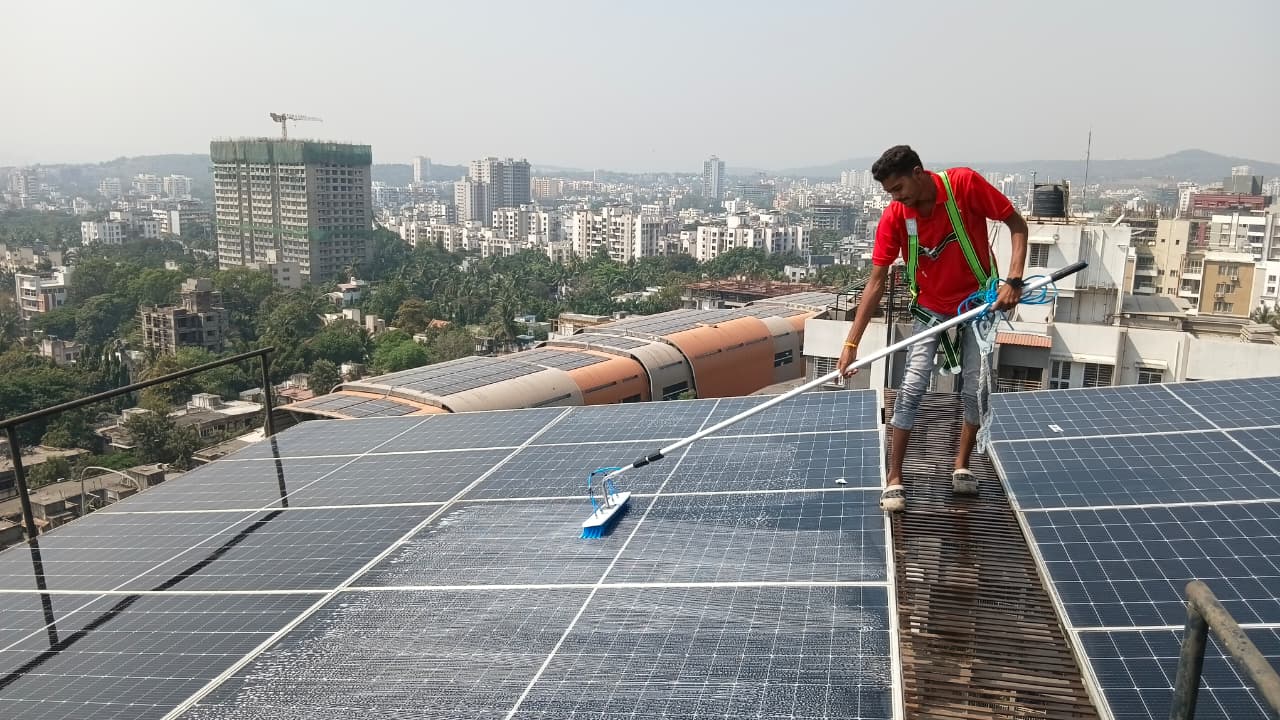
Cleaning solar PV panels is not a domestic chore. On a multi-story residential building in Pune, working on an elevated structural canopy introduces severe working-at-height hazards.
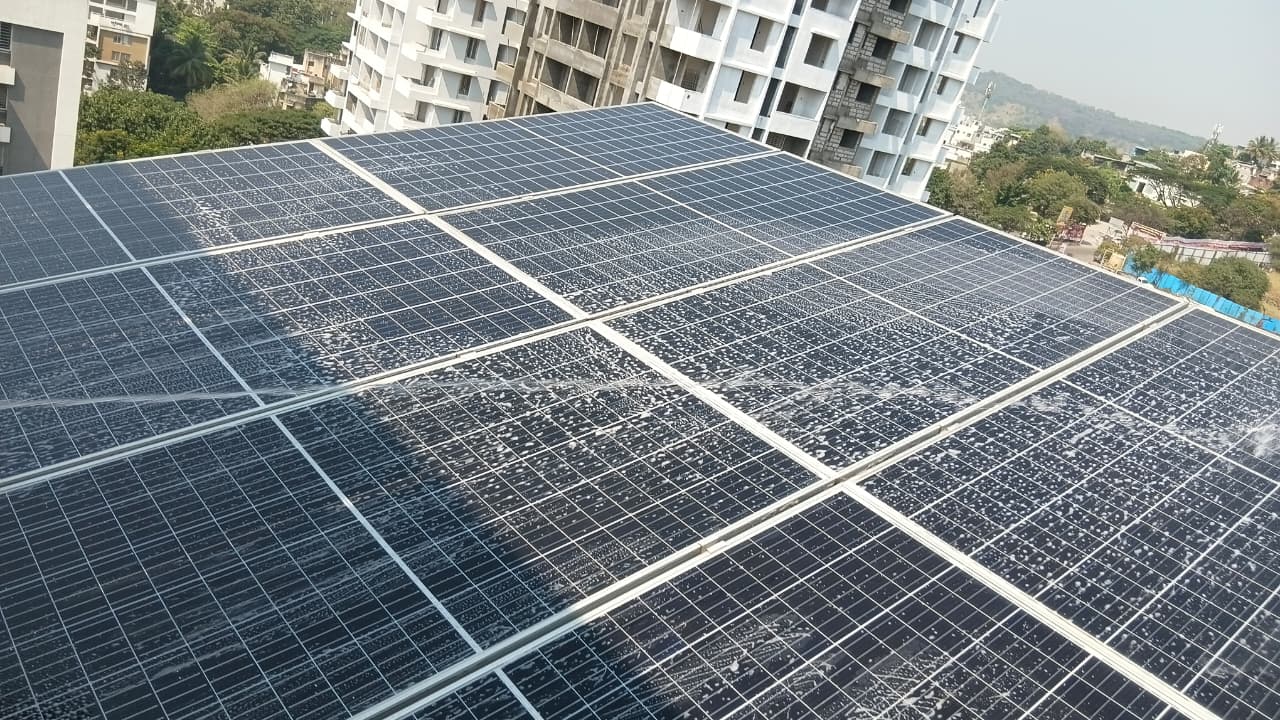
During this service visit, our technicians worked methodically across the 20 kW array, moving string by string.
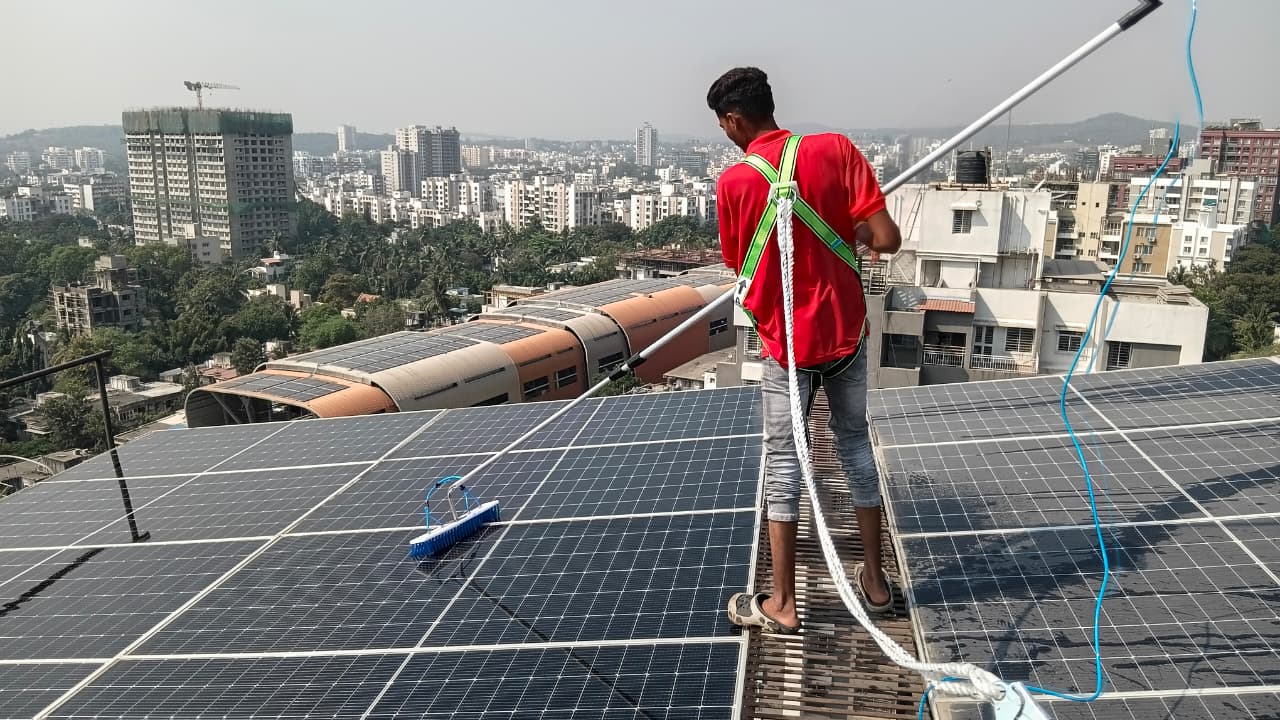
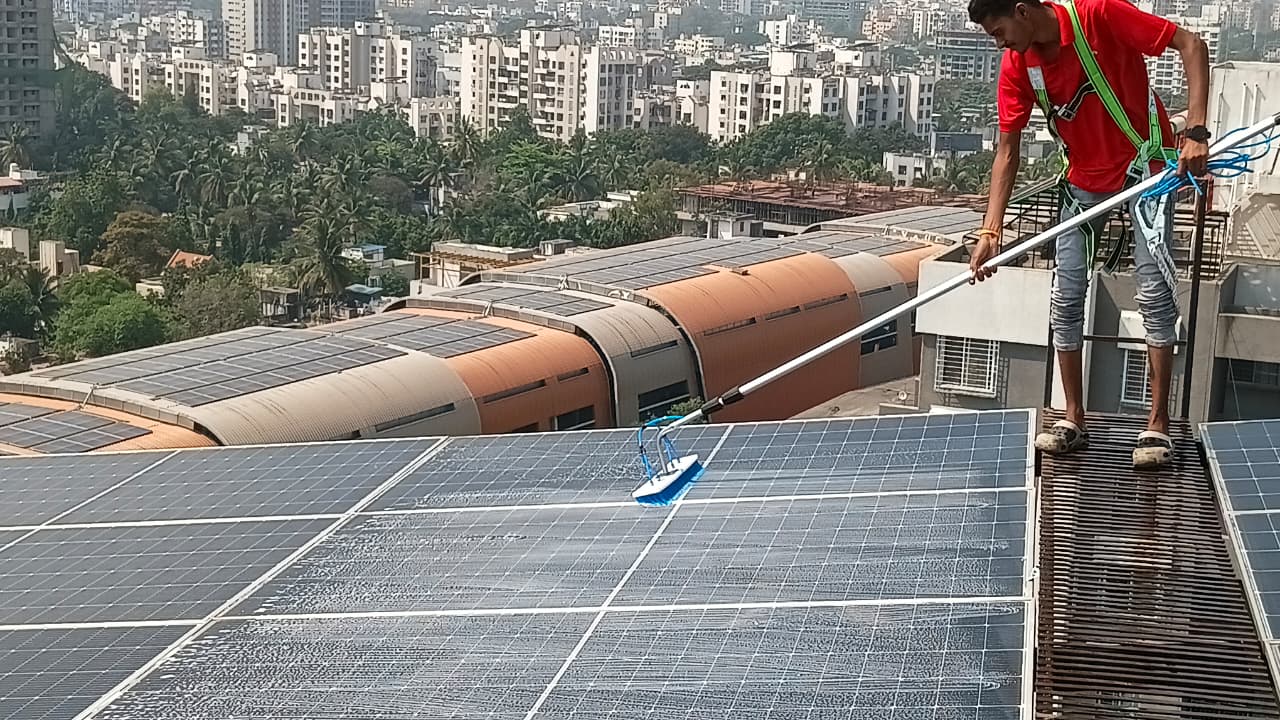
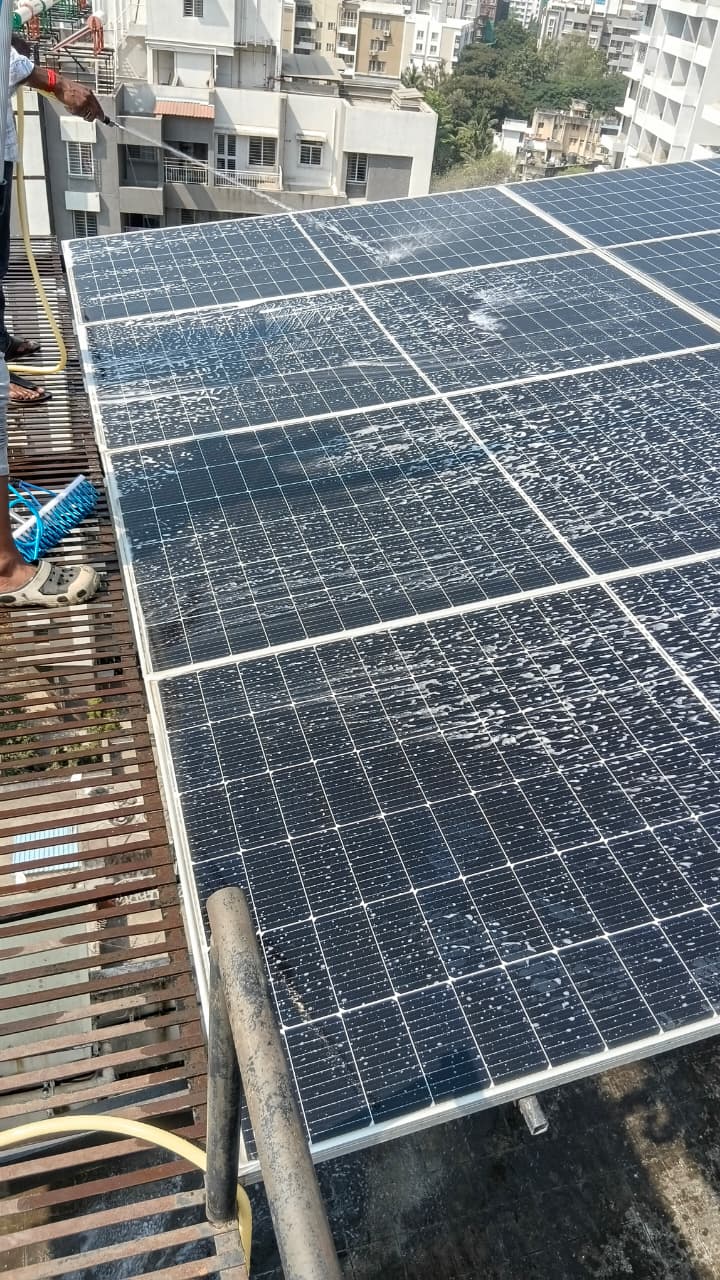
Three Non-Negotiable Engineering Rules for PV Cleaning
- Safety First (Fall Arrest Systems): Elevated rooftop structures place technicians 10 to 15 feet above the terrace slab and over 100 feet above ground level. As seen in our field photos, our personnel wear certified full-body safety harnesses clipped to structural lifelines at all times. Cleaning should never involve standing directly on module frames or stretching over edges without anchored fall protection.
- Thermal Shock Prevention: Under Pune's direct sun, module glass temperatures can easily exceed 65°C to 70°C by midday. Spraying cold water onto overheated glass causes violent thermal shock, resulting in microscopic glass fractures, micro-cracks across silicon wafers, or catastrophic tempered glass shattering. Cleaning is strictly carried out early in the morning before 8:30 AM or after the array has cooled in the late afternoon.
- Scratch-Free, Low-TDS Washing Equipment: Using harsh detergents, abrasive kitchen pads, or high-pressure pressure washers strips the delicate Anti-Reflective Coating (ARC) from the glass surface, permanently lowering panel efficiency and voiding the manufacturer's 25-year linear performance warranty. Solabrix uses calibrated water-fed poles with soft-bristled heads and low-TDS water to prevent mineral scale calcification.
3. The Result: Restoring Peak Optical Transmittance
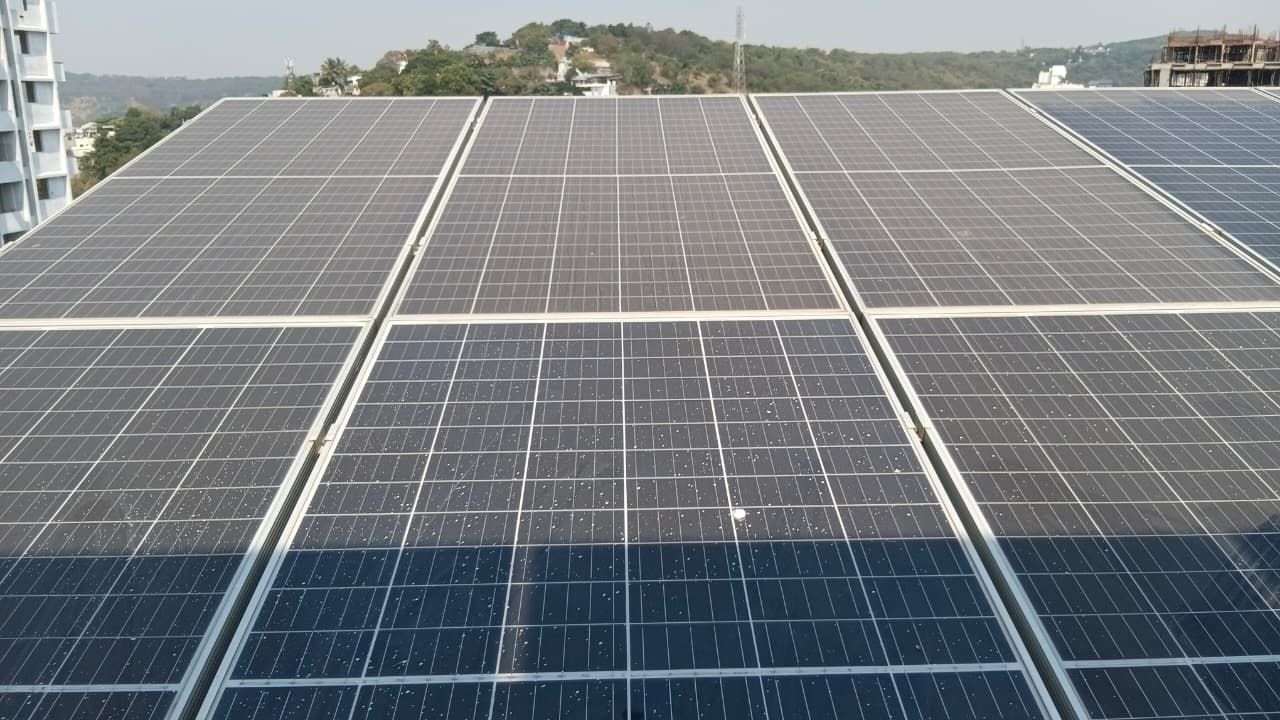
The difference before and after professional cleaning is visually and electrically striking.
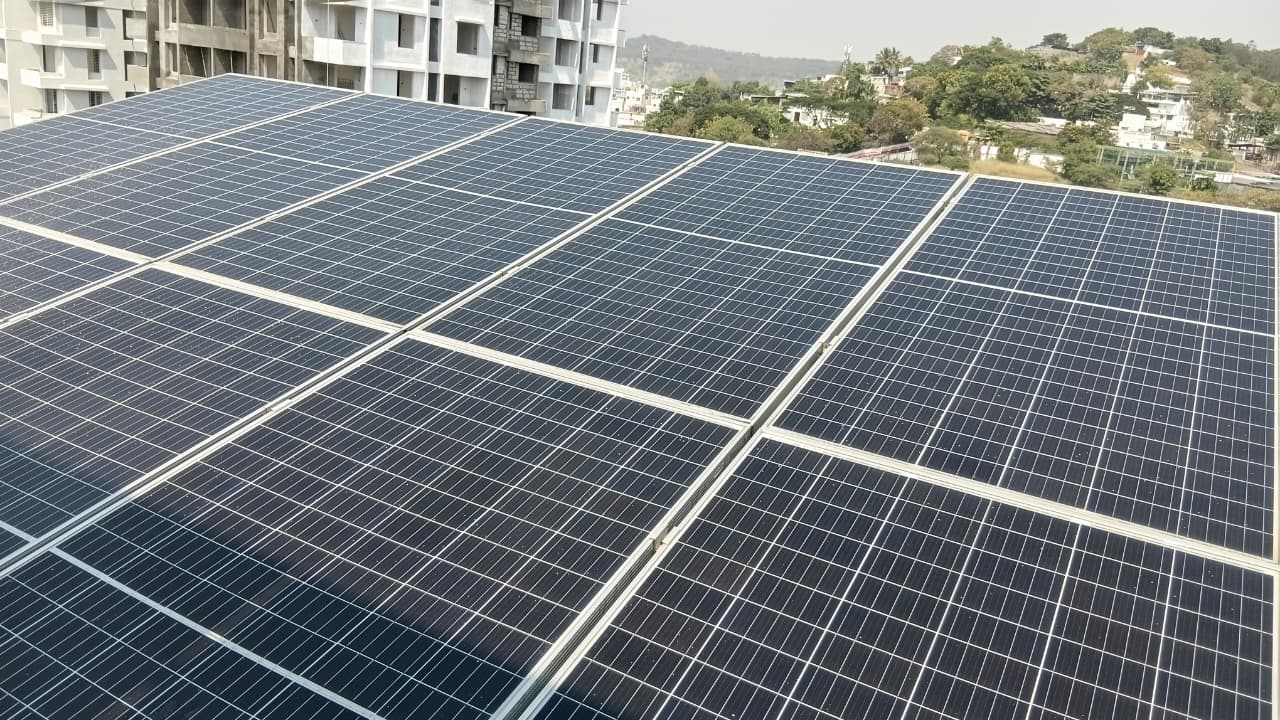
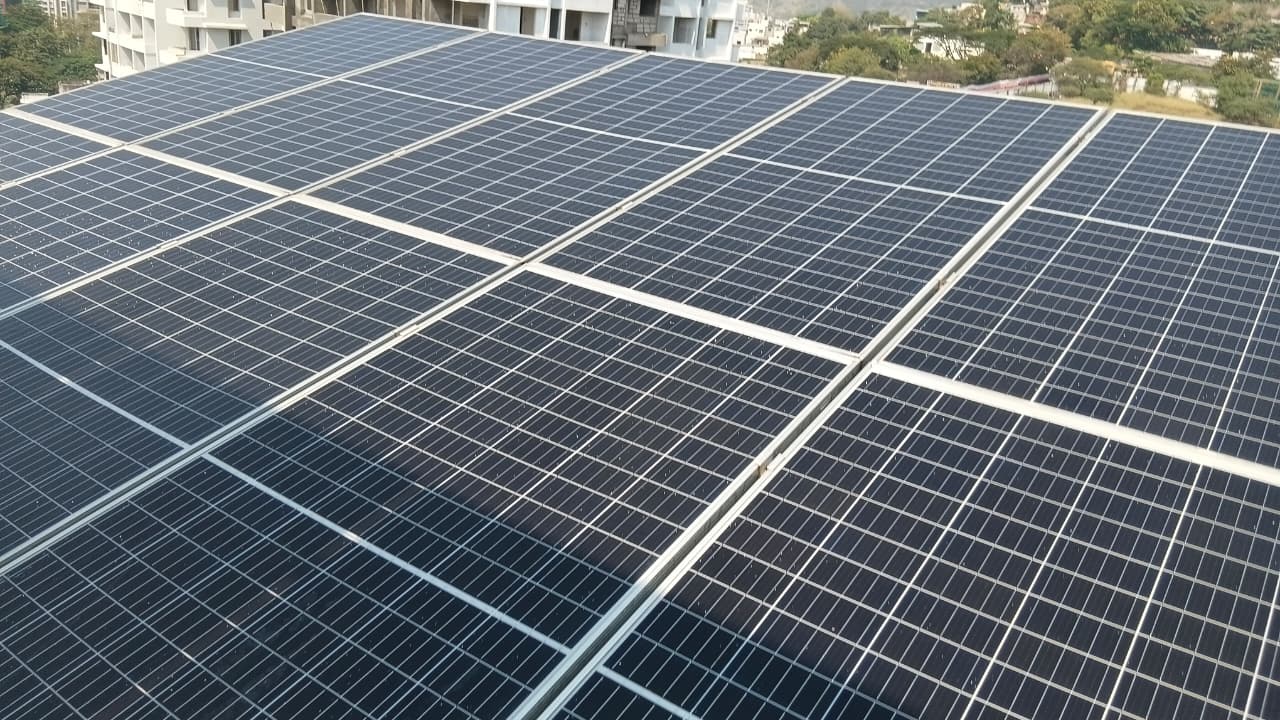
Removing the accumulated grime immediately recovers up to 20% of lost power generation, allowing the society's common-area meters to offset maximum grid electricity.
4. Maintenance Beyond the Glass: The Electrical Diagnostic Audit
Washing the modules is the visible part of rooftop maintenance. It is what most building committees notice and appreciate.
However, a rooftop solar plant is first and foremost a high-voltage electrical power station operating at up to 600V–1,000V DC. If a maintenance visit begins and ends with a water hose, it is not an AMC—it is merely janitorial work.
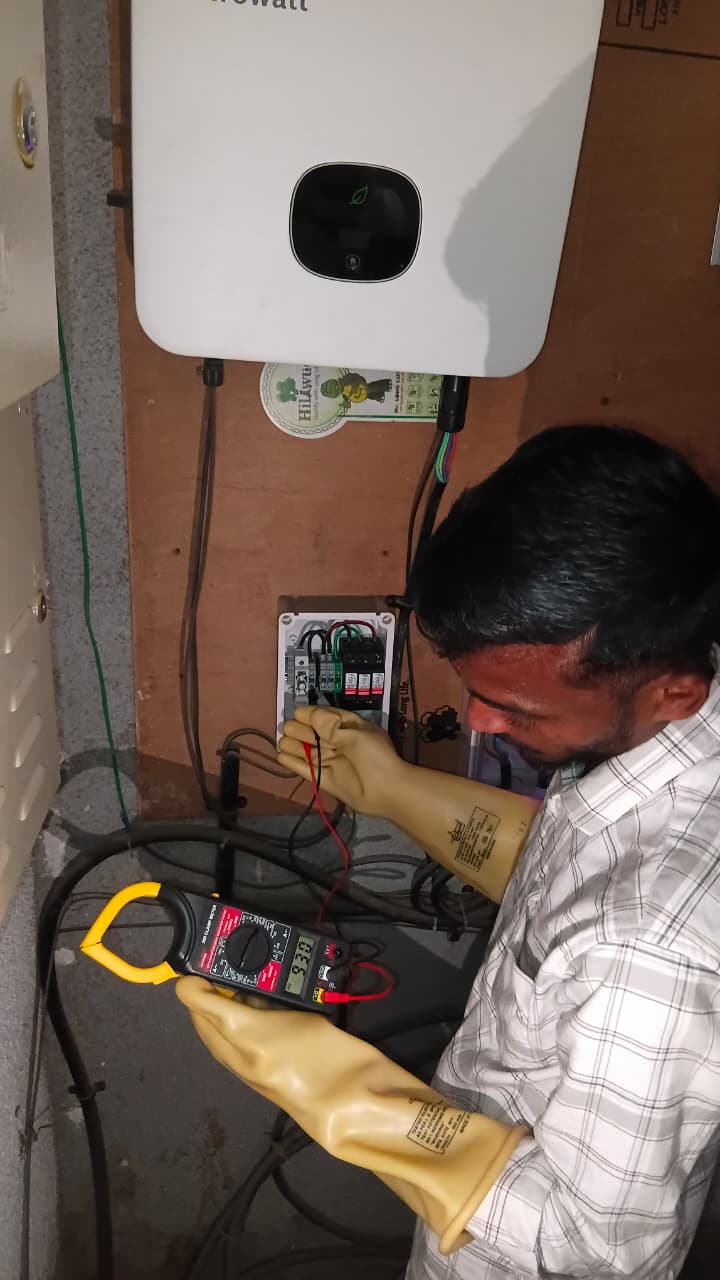
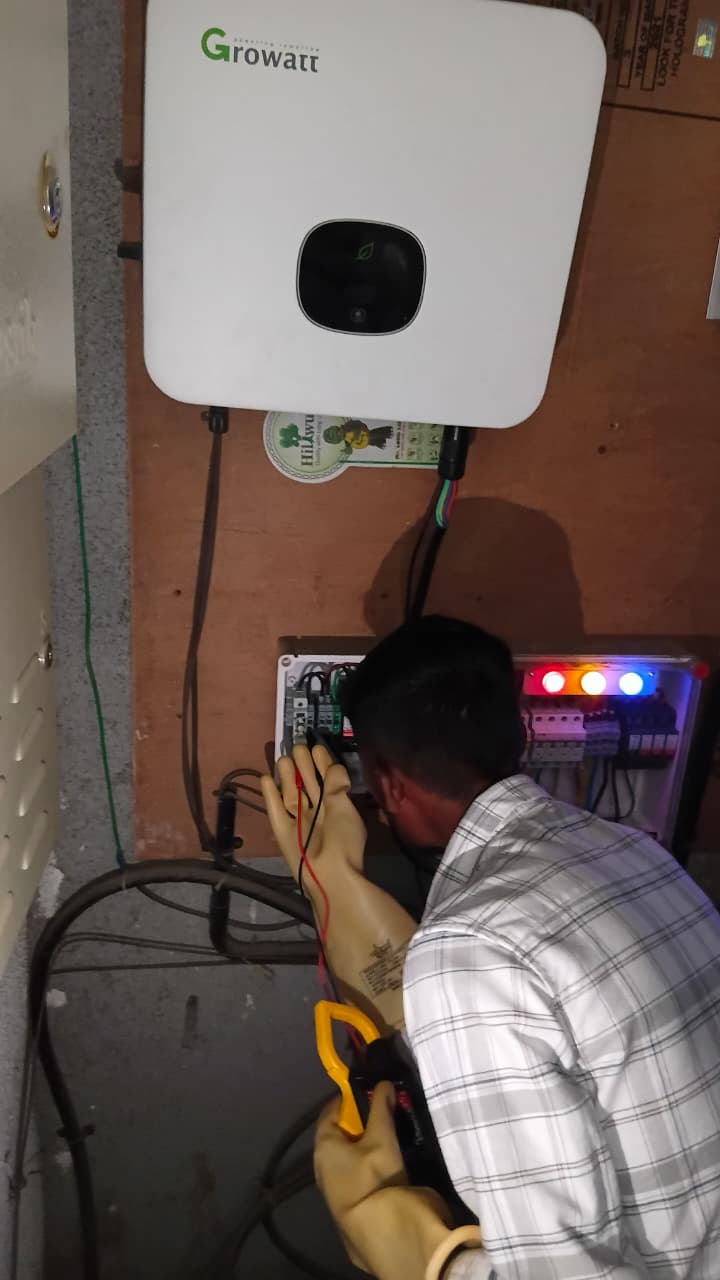
During yesterday's visit, once the physical cleaning was completed, our electrical team conducted a thorough diagnostic inspection of the plant's balance of system (BOS).
The Electrical Proof: Before vs. After Measurements
"The before and after electrical measurements show the improved performance in the form of increased voltage and current." Under matched solar irradiance conditions, logging the operating parameters of the strings before and after the washing cycle revealed a measurable increase in both DC string voltage and operating current. The reduction in cell operating temperatures due to dirt removal, combined with unhindered photon absorption, allowed the Growatt string inverter to track an optimal Maximum Power Point (MPP), delivering significantly higher active power into the society's LT busbar.
What the Electrical Health Check Covered:
- Terminal Torque Inspection: Rooftop thermal cycling causes wire strands to expand and contract, loosening screw terminals over time. Loose connections cause high electrical resistance, terminal melting, and dangerous DC arcing. Every terminal in the DCDB and ACDB was checked and re-torqued.
- Surge Protection Device (SPD) Status: Verifying that the status flags on DC and AC surge arresters remained green, confirming that lightning and switching surges have not compromised protection.
- Inverter Health & Event Logs: Interrogating the Growatt inverter menu for historical transient warnings such as insulation resistance faults (
PV Isolation Low) or grid over-voltage occurrences. - Earth Loop Continuity: Confirming bonding between module frames, structure rails, and dedicated earth pits.
5. The Overlooked Sibling: Caring for the Solar Water Heater (SWH)
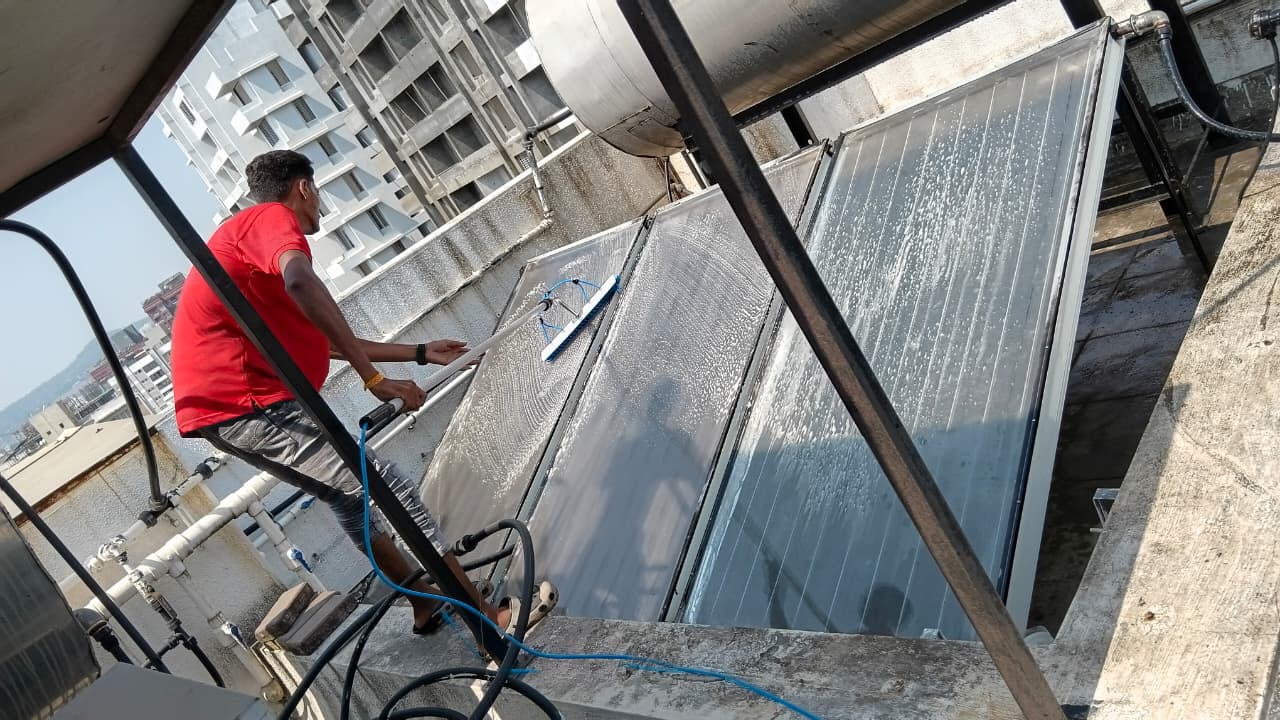
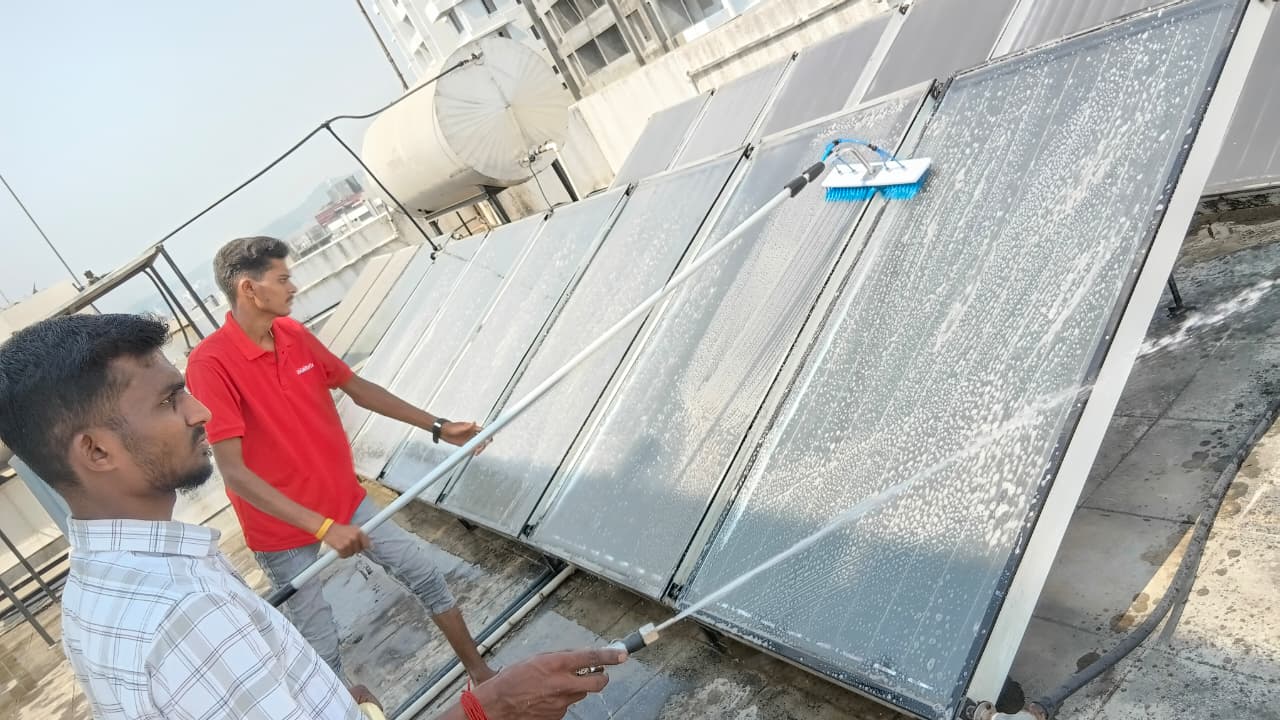
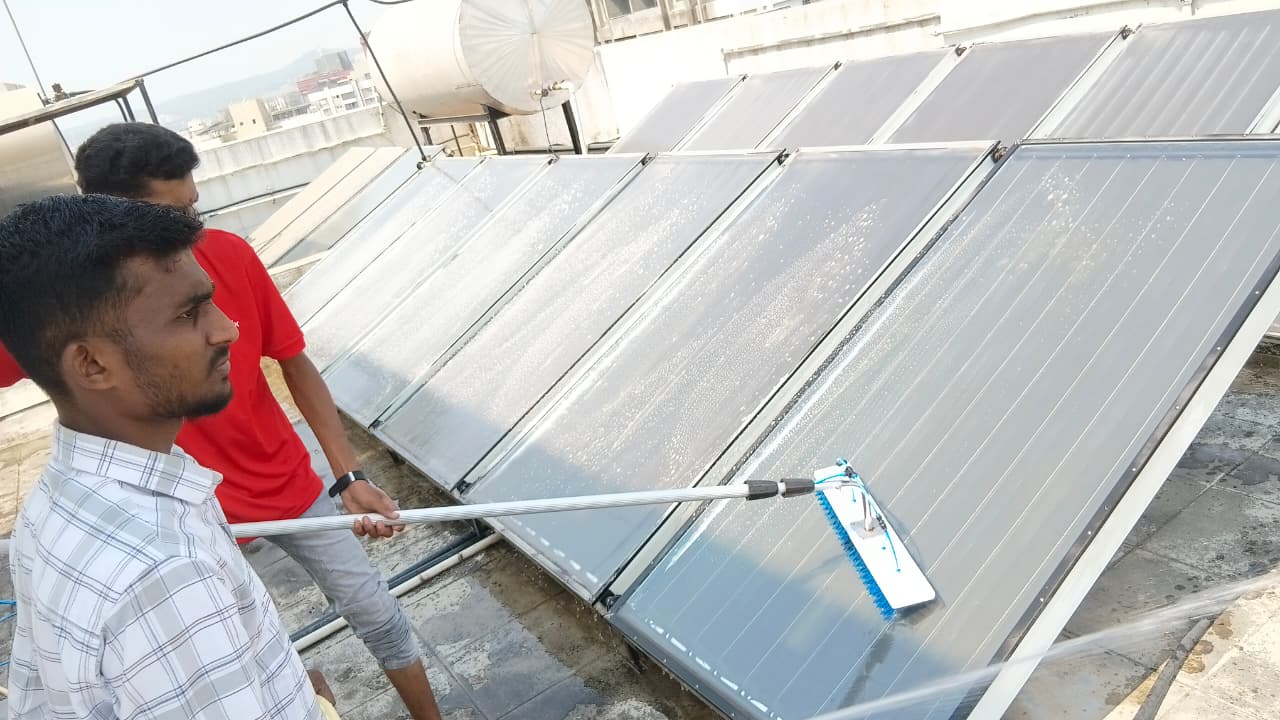
Here is where this rooftop visit offered its most valuable lesson: the rooftop housed an expansive Solar Water Heating (SWH) system alongside the PV modules.
In modern Indian apartment complexes, solar water heaters are often treated as "fit-and-forget" plumbing fixtures. While rooftop PV systems get monitored via smartphone apps and generation dashboards, solar water heating systems have no digital meters. They sit quietly on the roof, slowly accumulating layers of grime until residents complain that morning shower water is lukewarm.
PV vs. Solar Water Heating: Two Different Systems, Two Different Physics
┌────────────────────────────────────────────────────────────────────────┐
│             ROOFTOP SOLAR: PV VS. SOLAR THERMAL COMPARISON             │
├────────────────────────┼───────────────────────┼───────────────────────┤
│ Parameter              │ Solar Photovoltaic    │ Solar Water Heating   │
├────────────────────────┼───────────────────────┼───────────────────────┤
│ Energy Conversion      │ Sunlight → DC Electric│ Solar Radiation → Heat│
│ Primary Absorber       │ Silicon Semis (Cells) │ Copper / Al Fin Tubes │
│ Working Medium         │ Electrons in Conductor│ Water / Glycol Fluid  │
│ Critical Failure Risk  │ DC Arcing, Hotspots   │ Scaling, Leaks, Shock │
│ Neglect Penalty        │ Lower Unit Credits    │ High Backup Geyser kWh│
└────────────────────────┴───────────────────────┴───────────────────────┘
The "Hidden Geyser Trap": Why Dirty Water Heaters Drain Your PV Savings
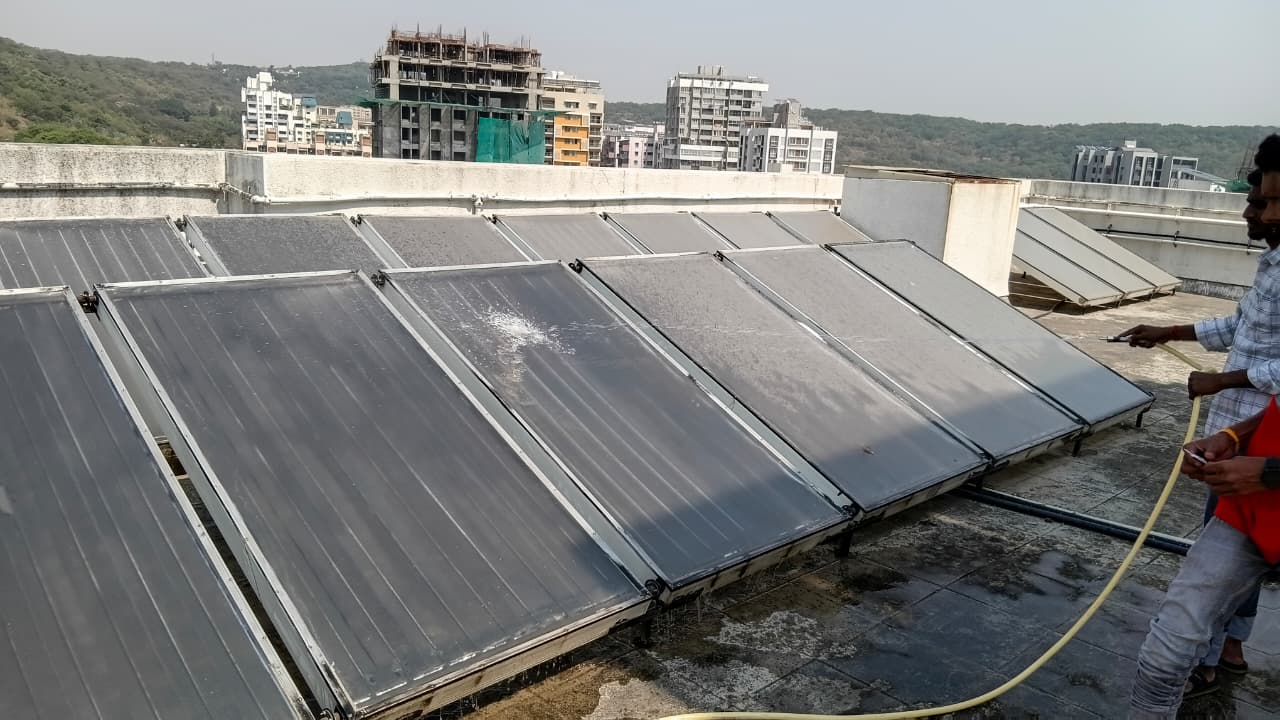
When the glazed glass of a Flat Plate Collector (FPC) or Evacuated Tube Collector (ETC) is coated with thick dust:
- Solar Thermal Efficiency Collapses: Optical transmission drops by 30% to 45%. The water inside the copper risers fails to reach design temperatures (55°C–65°C).
- The Backup Element Engages: Most society solar water heaters have internal 2 kW to 3 kW electric backup heating elements with automated thermostats to ensure hot water on cloudy days.
- The Unintended Irony: Because the dirty solar collectors fail to heat the water, the electric backup element turns on and runs for hours every morning.
The society installs a 20 kW solar PV plant to eliminate their common electricity bills—only to have dirty solar water heaters consume thousands of rupees of that power running resistance heating coils!
During this visit, our crew meticulously cleaned every glazed collector panel, checked plumbing lines for calcification leaks, examined silicone rubber seals, and verified that air release valves were operating freely.
6. The Value of a Unified Rooftop AMC
This visit highlights the fundamental advantage of managed, unified rooftop solar stewardship:
- One Rooftop, One Accountable Partner: When maintenance is fragmented, solar PV contractors refuse to touch solar water heaters ("we are electrical engineers, call a plumber"), and local plumbers refuse to touch the roof near the PV plant ("we don't handle high-voltage electrical roofs"). An integrated AMC bridges this gap safely and professionally.
- True Performance Verification: A genuine solar AMC leaves the owner with verifiable evidence. Our visit didn't end with a verbal "all good"—it provided documented before-and-after photographic records, torque checks, and empirical proof of increased voltage and current.
- Protecting 25-Year Asset Value: Solar equipment is built to last decades, but it does not operate in a vacuum. Scheduled quarterly maintenance protects warranties, prevents premature inverter failure, and guarantees maximum financial return on your clean energy investment.
Frequently Asked Questions (FAQs)
1 Can the same team clean both solar PV panels and solar water heaters?
Yes, provided the team is trained in both electrical safety and solar thermal collector care. The physical cleaning of glazed surfaces uses similar soft-bristle, low-pressure techniques. However, technicians must understand the critical safety differences: PV arrays generate up to 1,000V DC electrical shock hazards, while solar water heaters involve boiling water, pressure relief valves, and plumbing joints that must not be stressed.
2 How do dirty solar water heaters increase electricity bills?
Most residential solar water heaters are equipped with a 2 kW to 3 kW electrical backup immersion heating element. When dirt blocks sunlight from heating the water naturally, the thermostat trips the electric heating coil to reach comfortable bathing temperatures. This can consume 150 to 300 units of electricity per month per tank, eroding the savings generated by your rooftop solar PV plant.
3 Why do electrical measurements show higher voltage and current after cleaning?
Dust on PV panels acts as an optical filter, reducing solar irradiance reaching the silicon cells. Lower irradiance directly reduces output current. Furthermore, dirty cells operate hotter due to localized resistance; silicon solar cells lose approximately 0.35% to 0.40% voltage per degree Celsius rise. Removing the dust layer increases photon absorption (boosting current) and allows panels to cool naturally (boosting operating voltage).
4 Why should solar panels never be washed with cold water in the afternoon?
Rooftop solar panels reach surface temperatures between 60°C and 75°C under direct midday Indian sun. Applying cold tap water (20°C–25°C) creates extreme thermal shock. The sudden, localized contraction of the tempered glass causes micro-fractures in the glass, cracks delicate silicon solar cells, and can even cause the entire front glass sheet to shatter instantly. Washing must only be conducted before 8:30 AM or late in the afternoon.
5 What should be included in an electrical audit during a solar AMC visit?
A comprehensive AMC visit should include: (1) True-RMS DC string voltage and current logging under load, (2) Inverter fault code and event history review, (3) Terminal torque verification on all breakers, disconnects, and busbars, (4) Surge Protection Device (SPD) cartridge status check, (5) Earth pit resistance test and earthing bond continuity check, and (6) Visual inspection for UV-damaged or rodent-chewed cables.
Related Reading in the Solabrix Knowledge Base
- What Should a Solar Plant AMC Include? (Scope, Checklist & Deliverables) — The exact 4-pillar engineering scope required to protect a 25-year solar asset.
- Why Your Solar Plant Can Generate Electricity Every Day and Still Underperform — How invisible soiling and thermal derating quietly drain your monthly bill savings.
- The Complete Rooftop Solar Maintenance Checklist: What to Inspect Every Quarter — The 35-point technical inspection protocol used by certified field technicians.
- How Much Does Solar Plant AMC Cost in India? The Complete 2026 Pricing Guide — Capacity-wise pricing benchmarks and ROI mathematics.
- Solar Generation Score Calculator — Benchmark your plant's monthly generation against localized solar irradiance in your area.